
Urban Landscapes as Living Filters: How Shade Trees, Ornamentals and Natives Help Detoxify Heavy‑Metal‑Contaminated Soils

Urban landscapes are as diverse as the people who shape them. Some prefer clean lines, regular patterns, and tightly controlled plant palettes, while others gravitate toward heterogeneous textures, layered colors, and dynamic, living variability. Yet across this full spectrum of aesthetic preference, one truth holds: beneath every design style, whether minimalist courtyard or exuberant pollinator garden, plants are plants and they are performing a quiet, essential service. They are accumulating, stabilizing, and transforming heavy metals in contaminated soils, turning everyday landscapes into active biogeochemical filters that protect public health and restore ecological function. Recent scientific reviews confirm that phytoremediation, the use of plants and their microbial partners to remove or immobilize contaminants, is one of the most effective, low‑cost, and ecologically aligned strategies for restoring polluted soils.
301 Organics has documented an expanding list of urban landscape plants and trees, both native and non‑native, that demonstrate heavy‑metal tolerance or accumulation, helping detoxify soils in the short term (through stabilization) and long term (through biomass turnover and extraction).
Why Heavy‑Metal Accumulation Matters in Urban Soils
Heavy metals such as lead (Pb), cadmium (Cd), zinc (Zn), copper (Cu), and nickel (Ni) persist for decades. They do not biodegrade. They accumulate in soil, dust, and plant tissues, and can enter the food chain through crops or inhalation of contaminated particulates. Phytoremediation mechanisms offer a sustainable alternative to excavation or chemical treatments by:
Extracting metals into harvestable biomass
Stabilizing metals in the root zone
Reducing mobility and bioavailability
Supporting microbial communities that further transform contaminants
These mechanisms are well‑documented in recent reviews of phytoremediation science, which emphasize the importance of selecting species with strong uptake and tolerance traits. Below is a listing of more recent published studies on the subject of using plants to detoxify contaminated sites:
Phytoremediation of Heavy Metals: An Indispensable Contrivance in Green Remediation Technology - PMC
The Role of Trees: Long‑Term Stabilizers and Soil‑System Engineers
Urban trees are often overlooked in phytoremediation conversations, yet they are among the most powerful long‑term stabilizers of heavy metals in the landscape. Their deep root systems, long lifespans, and partnerships with mycorrhizal fungi make them essential components of contaminated‑soil recovery.
Oaks (Quercus spp.)
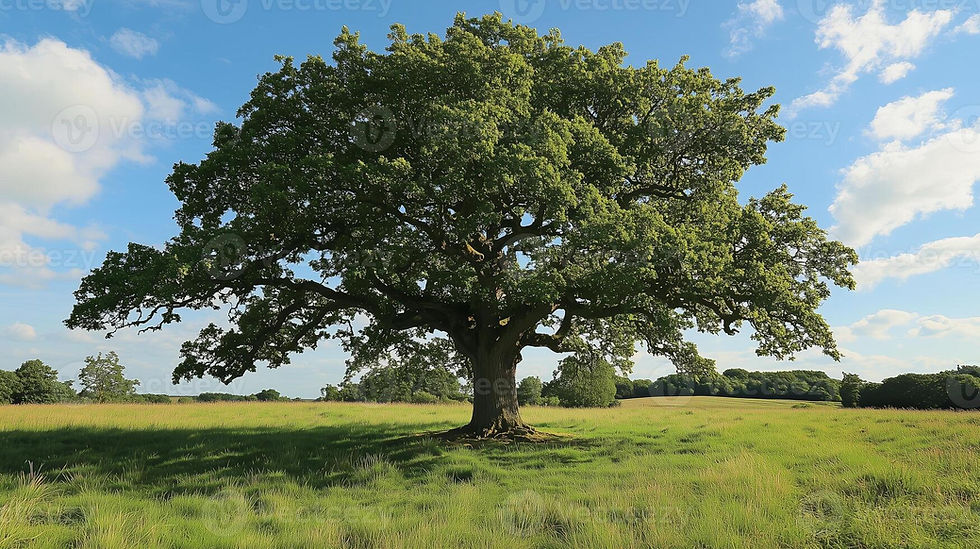
Oaks anchor entire soil ecosystems. Their extensive root systems and strong associations with ectomycorrhizal fungi help immobilize metals, reduce their mobility, and rebuild soil structure. In post‑fire and post‑disturbance soils, oaks are often the first major canopy species to re‑establish microbial networks. Removal of them is ill-advised.
Deodara Cedar (Cedrus deodara)

Deodara cedars tolerate compacted, nutrient‑poor, and even contaminated soils. Metals accumulate slowly in their woody tissues over decades, making them effective long‑term sinks for Pb, Cd, and Zn in urban corridors.
Pines (Pinus spp.)

Pines thrive in disturbed or post‑fire soils and form strong mycorrhizal partnerships that enhance metal stabilization. Their needle litter also contributes to organic matter that binds metals and reduces dust mobility.
Sycamores (Platanus racemosa and Platanus × hispanica)

Sycamores have high transpiration rates and expansive root systems that help move, stabilize, and transform contaminants in riparian and urban environments. Their tolerance of roadside pollution makes them valuable in high‑exposure corridors.
Urban Landscape Plants With Documented Heavy‑Metal Uptake
Below is a curated list of species that are common in Southern California landscapes. Research has shown these plants to accumulate or tolerate heavy metals. These plants are not just surviving in contaminated soils; they are actively contributing to soil detoxification.
Evening Primrose (Oenothera spp.)

Evening primrose is a disturbance‑adapted species frequently found in roadside and compacted soils. Studies show it can accumulate Pb, Cd, and Zn in both roots and shoots, making it a strong candidate for phytoextraction in urban corridors.
Sweet Alyssum (Lobularia maritima) - Non‑native Hyperaccumulator

Sweet alyssum is one of the most effective Zn and Ni hyperaccumulators among common ornamentals. Its dense biomass and rapid growth make it ideal for repeated harvesting cycles. Studies on related Alyssum species demonstrate extreme Ni hyperaccumulation; Lobularia maritima shows similar uptake patterns in urban soils (Journal of Hazardous Materials, 2020).
Lantana (Lantana camara) - Non‑native, Drought‑Tolerant Accumulator

Lantana is widely planted for its drought tolerance and pollinator value. It is also a documented accumulator of Pb, Cd, and Cu, often storing metals in leaf tissue. A 2022 study in Chemosphere found significant Pb and Cd accumulation in lantana grown in contaminated soils.
French Lavender (Lavandula dentata) - Non‑native Accumulator

French lavender is highly tolerant of urban pollution and has been shown to accumulate Pb, Zn, and Cu in both roots and shoots. Its evergreen habit and long flowering season make it a year‑round contributor to soil detoxification. A 2023 article in Plants reported strong Pb and Zn uptake in Lavandula species grown in roadside soils.
Rosemary (Salvia rosmarinus) - Non‑native Accumulator

Rosemary is one of the most reliable drought‑tolerant accumulators in Mediterranean landscapes. Studies show uptake of Pb, Cd, and Zn, with metals stored primarily in leaves and stems. A 2020 study in Environmental Monitoring and Assessment documented rosemary’s ability to accumulate Pb and Cd in urban soils.
Fountain Grass (Pennisetum setaceum)

Ornamental grasses, including fountain grass, excel at phytoextraction due to their fibrous root systems and high biomass turnover. They accumulate Zn, Pb, and Ni, and stabilize soils prone to erosion. A 2023 review in Environmental Advances highlighted Pennisetum species as effective accumulators in contaminated urban soils.
Bougainvillea (Bougainvillea spp.)

Bougainvillea is exceptionally tolerant of polluted soils and urban stress. Studies show it can accumulate Pb and Cd in roots, stems, and leaves—often without visible toxicity symptoms, making it a strong candidate for phytostabilization in residential and roadside settings.
Integrating Natives + Ornamentals for Maximum Soil Function
While many of the strongest accumulators are non‑native ornamentals, several California natives also demonstrate metal tolerance or uptake, especially those adapted to serpentine or fire‑affected soils. These include:
California buckwheat (Eriogonum fasciculatum)
California poppy (Eschscholzia californica)
Wright’s cudweed (Pseudognaphalium canescens)
Blending these natives with high‑performing ornamentals creates functional, biodiverse, and resilient urban landscapes that support pollinators, soil microbial recovery, and long‑term ecological function.
301 Organics’ Field Documentation: What We’re Seeing in Southern California
Across parkways, medians, residential landscapes, and post‑fire zones, 301 Organics has documented:
Ornamentals maintaining vigor in soils with elevated Pb, Cd, and Zn
Native species thriving in disturbed or fire‑affected soils
Oaks, sycamores, pines, and deodaras reviving
Plants germinating from seed improving soil structure and microbial activity
Short‑term reductions in metal mobility where accumulators are established
These observations align with global research showing that phytoremediation is most effective when integrated into urban planning and landscape design, not treated as a standalone remediation project.
Conclusion: Urban Plants and Trees Are Already Doing the Work
Urban landscapes are not passive. They are active biogeochemical systems. By intentionally selecting plants and trees with known heavy‑metal tolerance or accumulation capacity, cities and homeowners can:
Reduce long‑term soil toxicity
Improve ecological function
Support pollinators and biodiversity
Enhance resilience in post‑fire and post‑industrial soils
Phytoremediation is not a future technology. It is happening now, in our medians, parkways, and backyards. With thoughtful plant selection and soil stewardship, we can accelerate the detoxification of urban soils and build healthier, more resilient communities.


Comments